
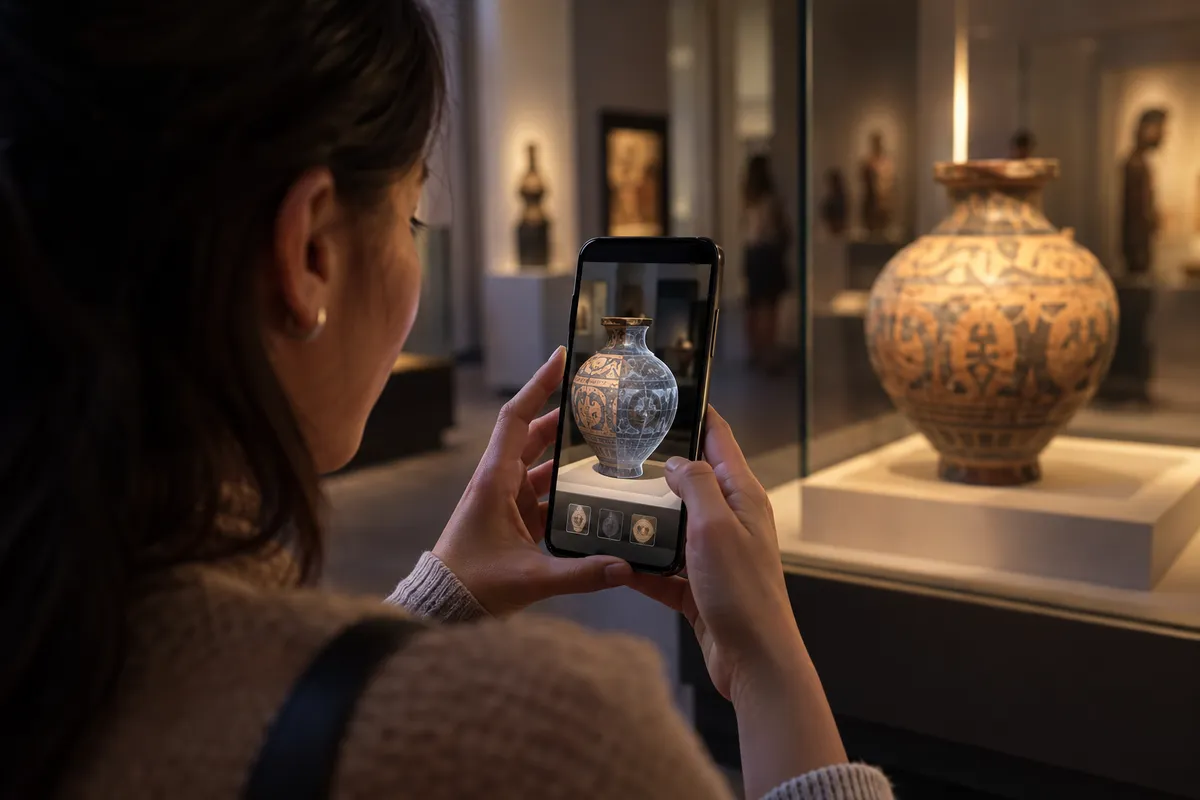
Plenty of museums now offer a VR headset, an AR overlay or a 3D scan of an artifact you can spin on a screen. Some of these are memorable. Others are a gimmick you forget before the gift shop. A new study gives you a way to tell them apart before you spend your time: look for the exhibit that connects you to a story, not the one with the flashiest hardware.
That's the takeaway from research out of Science Tokyo, reported by Phys. The study found that emotional connection to cultural heritage is the strongest driver of engagement with digital museum experiences. According to the report, VR, AR, 3D models and LiDAR-based exhibits work best when they link visitors to local stories, memories and identity, and not merely when they are technically impressive.
Below is how to use that finding on your next trip. The practical advice is mine; the research findings are as Phys reported them.
Why this matters for travelers
Per the report, museums are adopting digital tools quickly to make collections more accessible and interactive. That includes regional institutions with limited resources. So you're increasingly likely to meet these exhibits in small local museums, not only in big national ones.
The study's message is that technology alone doesn't create engagement. Feeling connected does. For you, that means a modest exhibit with a strong local story can beat a high-budget one with none.
Know the four technologies you'll meet
The research covers several formats. Here's what each is, in plain terms.
3D digital models
These are digital reconstructions or scans of objects, buildings or sites. A good one lets you examine details you couldn't see behind glass, such as the underside of a vessel or the wear on a tool.
LiDAR-based exhibits
LiDAR is a scanning method that measures distance to capture the shape of a space or object. In a museum context, it can underpin detailed digital records of places and artifacts. If an exhibit mentions LiDAR, ask what was scanned and why that place mattered to the community around it.
Virtual reality
VR puts you inside a reconstructed scene. It's most useful when the scene no longer exists, or when it's somewhere you can't safely or legally stand.
Augmented reality
AR layers digital content onto the real world, usually through a phone or tablet. It suits sites and galleries where you want context without losing sight of the real object in front of you.
Look for the story before the screen
If emotional connection is what drives engagement, then the first thing to check is what the exhibit is about, not what it runs on. Before you queue for a headset, read the label or ask staff a few questions:
- Whose story does this tell? A named family, a neighborhood, a craft, a festival?
- Is it tied to this place? An exhibit rooted in local memory and identity is what the study points to as most engaging.
- Does it ask you to feel something or just watch something? A scene that puts a human experience at the center usually beats a tour of polished pixels.
These are my rules of thumb, built on the study's finding. They're a quick filter, not a guarantee.
Prime yourself with a local hook
You can supply some of the emotional connection yourself. Before a visit, spend ten minutes learning one thing about the area: a local industry, a famous disaster, a food tradition, a name on the street signs. Then seek the digital exhibit that touches it.
The research suggests connection is what makes these tools work. Arriving with a hook gives a 3D model or VR scene something to attach to. A scanned doorway means more when you know who walked through it.
Treat digital exhibits like a guided tour
One of the angles raised around the study is what VR and AR museums can learn from guided tours. A good guide doesn't recite facts. They pick a story, point at a detail and let you feel why it mattered. You can ask the same of a digital exhibit.
- Pause at the moments that make you curious and follow them up with a staff member or a nearby display.
- Compare the digital version with the physical object or site, if both are available. What does the screen show that the real thing can't, and vice versa?
- Ask a human. Regional museums often have staff or volunteers with deep local knowledge, which is exactly the connective material the research highlights.
Don't write off small museums
The report notes that regional institutions often have limited resources, yet are among those adopting digital tools. That's good news for curious travelers. A small museum may not have cutting-edge hardware, but it often has the thing the study says matters most: a close tie to the community and its memories.
If you have a free afternoon in a smaller town, a local museum with a simple 3D model or an AR trail may give you a better sense of the place than a major attraction with a long queue.
A quick checklist for your next visit
- Read the exhibit description first. Look for a local story, a person or a memory.
- Match it to something you already learned about the place.
- Try one digital exhibit properly instead of sampling five quickly.
- Look at the real object or site afterward and notice what changed in how you see it.
- Talk to staff about why the community chose to digitize this particular thing.
The bottom line
The Science Tokyo findings, as reported by Phys, suggest that the best digital museum experiences are personal and rooted in place. So next time a screen or headset beckons, skip the question of how advanced it is. Ask whose story it tells, and choose the exhibit that makes you feel part of it.