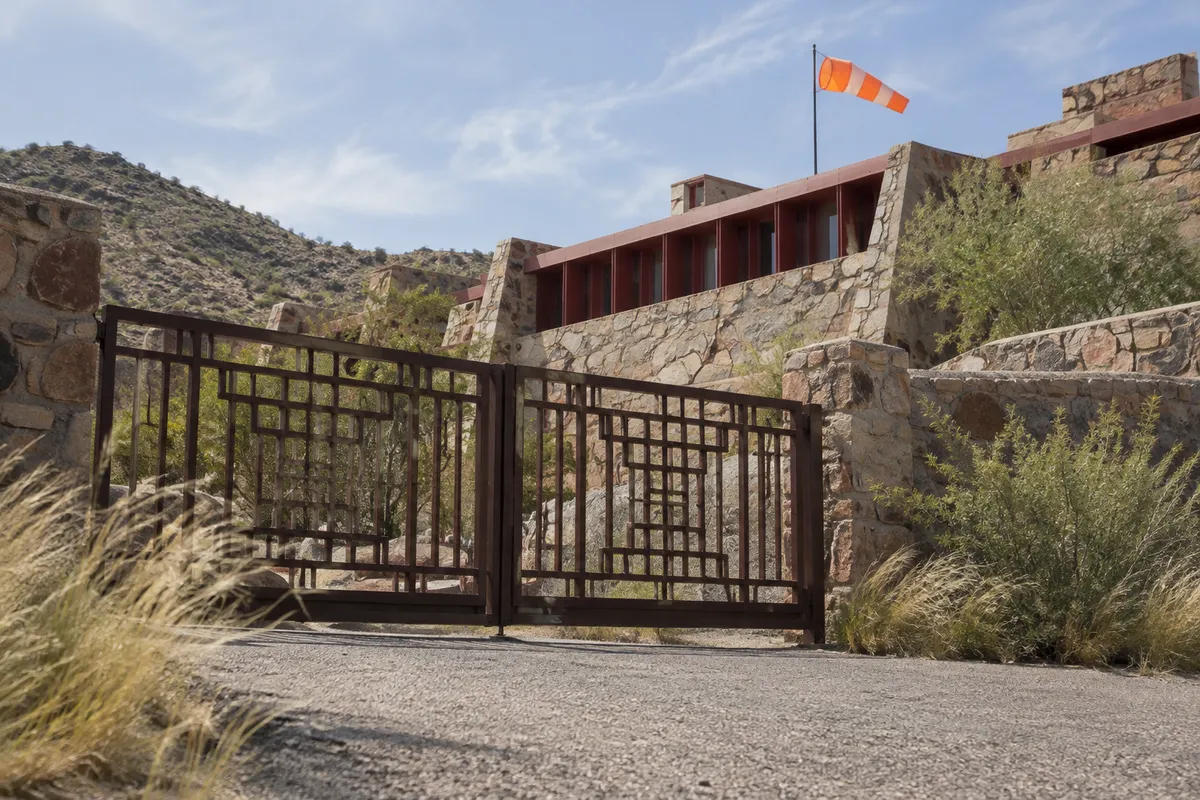
A tourist was killed at Frank Lloyd Wright's Taliesin West in Scottsdale, Arizona, after strong winds reportedly sent roofing material flying during a tour, per Fox News. A Scottsdale police official confirmed to Fox News Digital that the incident was weather-related and that no foul play is suspected. The landmark has closed following the accident.
This is a sad story, and the details available so far are limited. What follows covers what has been reported, why a site like this is exposed to the elements by design, and practical steps you can take to protect yourself at open-air and historic attractions. If you have a visit planned, check the site's official channels for its current status before you go.
What has been reported
The core facts, as relayed by Fox News:
- A tourist died in an accident at Taliesin West in Scottsdale.
- Strong winds reportedly sent roofing material flying while a tour was underway.
- A Scottsdale police official told Fox News Digital the accident was weather-related.
- Police said no foul play is suspected.
- The landmark has closed.
The reporting available to us does not name the victim, specify what the roofing material was, or say when the site might reopen. We won't guess at any of that. Updates should come from the site and local authorities.
Why a Wright landmark is so exposed to weather
Taliesin West is a place people visit precisely because it blurs the line between building and landscape. Wright's architecture was famously designed to sit in conversation with its setting, and that openness is part of what you come to experience. It is the reason the tours are so memorable.
The flip side is that a structure designed to feel connected to the outdoors is also, by nature, more connected to outdoor conditions. That is our analysis, not a finding from any investigation. Nothing reported so far says how the roofing material came loose or whether the design or its upkeep played any role. Those are questions for the people who will examine the incident, and it would be unfair to speculate.
The broader challenge: old landmarks, sudden weather
Historic sites face a real tension. Preservation rules and authenticity push toward keeping original materials and forms. Visitor safety pushes toward modern standards, monitoring, and the willingness to close on short notice. Fox News's framing of the story points to sudden weather events as a growing concern for public venues, and this accident has put that concern in front of a wide audience.
For travelers, the practical lesson is less about any one building and more about how quickly conditions can change at places where you are guided through exposed areas.
How to stay safer at open-air and historic sites
None of this is a prediction of danger at any particular place. These are sensible habits that cost you little.
Check conditions before you leave
Look at the forecast for wind, not just rain and temperature. Many people check only the high and the chance of showers. Wind advisories and gust forecasts matter far more at sites with roofs, canopies, scaffolding, or loose structures overhead.
Confirm the site is open that day
Many tours operate on set schedules and may change or cancel when conditions turn. Check the official website or call the day of your visit, and again on your way if the weather is shifting.
Listen to your guide and follow instructions immediately
If a guide asks the group to move indoors, change route, or leave an area, do it right away and without lingering for one more photo. Guides know the site and are the first line of communication.
Notice what is above and around you
When the wind picks up, pay attention to roofing, awnings, signs, tents, trees, and anything lightweight that could be lifted. Move away from them, ideally toward solid, enclosed shelter, and not along the edge of a structure or under an overhang.
Don't treat a tour as a reason to stay put
Groups can feel committed to finishing an itinerary. If you feel unsafe, say so to your guide and move to shelter. A shortened tour is a small cost.
What this means if you planned a Taliesin West trip
The closure means your plans may change. Check the landmark's official channels for the latest on reopening, rescheduling, and refunds, and be cautious of unofficial sources repeating rumor. If you are in the Scottsdale area, other architecture and desert sites may be good alternatives, but check each one's status and the wind forecast the same way.
This was a tragic accident at a place many people travel across the world to see. Our thoughts are with the victim's family and friends.
Before your next tour of any exposed landmark, check the wind forecast and confirm the site is open that morning.