Holiday travel is hard on everyone, but for a person living with dementia, a changed routine can mean more confusion and more stress. If you're a caregiver weighing a trip this season, this guide will help you decide how to plan it, what to protect, and when staying put may be the better choice.
The advice here draws on expert tips reported by Bakersfieldnow, which emphasize routine, safety, medications, quieter spaces, and flexible planning. The reporting doesn't offer a detailed script for every scenario, so treat what follows as a framework, and talk with your loved one's doctor about specifics.
Start With the Real Question: Will This Trip Bring Comfort?
The central message of the expert guidance is that travel should be supportive and low-stress. If a trip may not bring your loved one joy or comfort, the experts suggest reconsidering it.
That can feel like giving something up. It helps to separate the tradition from the travel. The goal of a holiday is connection, and connection doesn't always require a long journey. Some families bring the gathering to the person instead: a smaller visit, a shorter stay, or a quiet meal at home.
If you do decide to go, the rest of this guide is about making it gentler.
Protect the Routine Wherever You Land
Routine is the first thing holiday travel disrupts, and it's what the experts stress keeping as intact as possible. A new place, new schedule, and new faces can heighten confusion.
A practical way to think about it: identify the anchors of an ordinary day and carry them with you. Consider:
- Meal and sleep times. Keep them as close to normal as you can, even if everyone else is eating late.
- Morning and evening rituals. Whatever happens at home first thing and before bed should happen on the road too.
- Familiar objects. Items from home can make an unfamiliar room feel less strange.
These are my suggestions for putting the routine advice into practice, not specific recommendations from the report. Adjust them to the person you know.
Medications and Safety Come First
Medications are on the experts' list for good reason: a missed dose during a chaotic travel day is an easy mistake. Pack them in your carry-on rather than checked luggage, keep them with you rather than in a bag that might be stowed away, and know your dosing schedule before you leave.
Safety planning deserves the same attention. Unfamiliar environments can be risky for someone who is confused, so think ahead about where your loved one will be, who is watching them, and what could go wrong in a house or hotel they don't know.
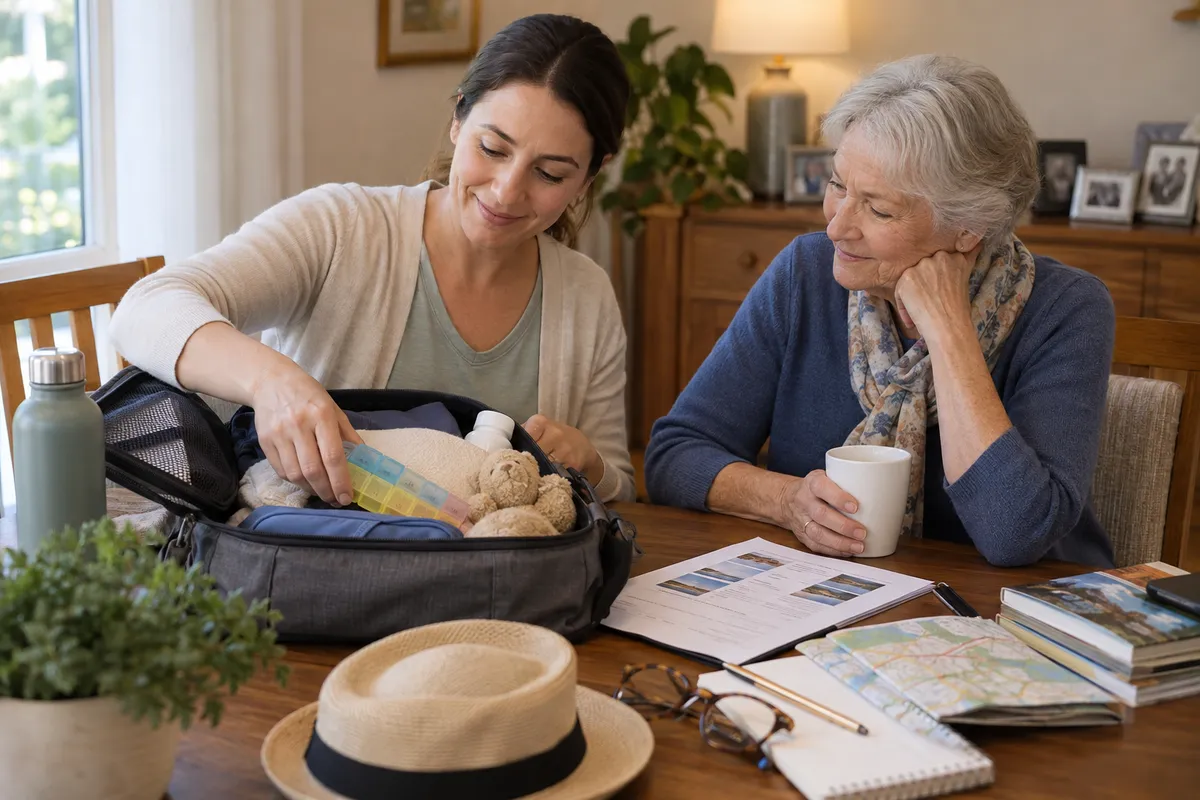
Packing for emergencies is also worth a few minutes. A short list of what to keep within reach:
- Medications and a written schedule
- Contact information for the doctor and key family members
- Comfort items and familiar snacks
- A change of clothes, in case of delays or accidents
Again, this packing list is a practical extension of the safety theme rather than a direct quote of the experts' list.
Build in Quiet Spaces
Holiday gatherings are loud: overlapping conversations, kitchen noise, extra children, a television running in the background. The experts recommend quieter spaces, and that's something you can arrange in advance.
Before you arrive, ask your host whether there's a calm room where your loved one can rest. Agree on a signal with another family member so you can step away without a fuss. A person with dementia may do better with a few short stretches of company than with an entire afternoon in the middle of the crowd.
It also helps to prepare relatives. Letting them know ahead of time what to expect can make the visit easier for everyone, including them.
Plan Flexibly, Not Tightly
Flexibility is the last pillar of the experts' advice, and it matters most. A packed itinerary leaves no room for a bad hour. A flexible one lets you leave early, skip an event, or take a long rest without feeling you've failed.
Some ways to build in slack:
- Choose travel times that fit your loved one's best part of the day.
- Leave extra time at every transition, whether that's an airport, a rest stop, or a front door.
- Decide in advance which events are essential and which are optional.
- Pick a backup plan, such as heading back early, so you're not improvising under stress.
Flying or driving?
The report as relayed doesn't rank one over the other, so the right choice depends on your situation. Driving lets you control the pace, stops, and surroundings. Flying is faster but brings crowds, noise, and strict timing. Think about which environment your loved one tolerates better, and which gives you more room to adjust when something goes wrong.
When Staying Home Is the Kinder Choice
The experts' bottom line is worth repeating: if travel may not bring joy or comfort, rethink it. Skipping a trip isn't a failure of love. If the logistics will leave your loved one frightened or exhausted, a smaller celebration close to home may serve them far better.
You can still include distant relatives. A video call at the time of day your loved one is at their best, or a visit from a few family members in a familiar setting, can keep the holiday meaningful without the upheaval.
The Takeaway
Before you book anything, ask what your loved one's best day looks like, then plan the holiday around that. If the trip fits it, protect the routine, carry the medications, and schedule quiet. If it doesn't, bring the holiday to them.
Source: reporting by Bakersfieldnow on expert holiday travel tips for people living with dementia and their families.