
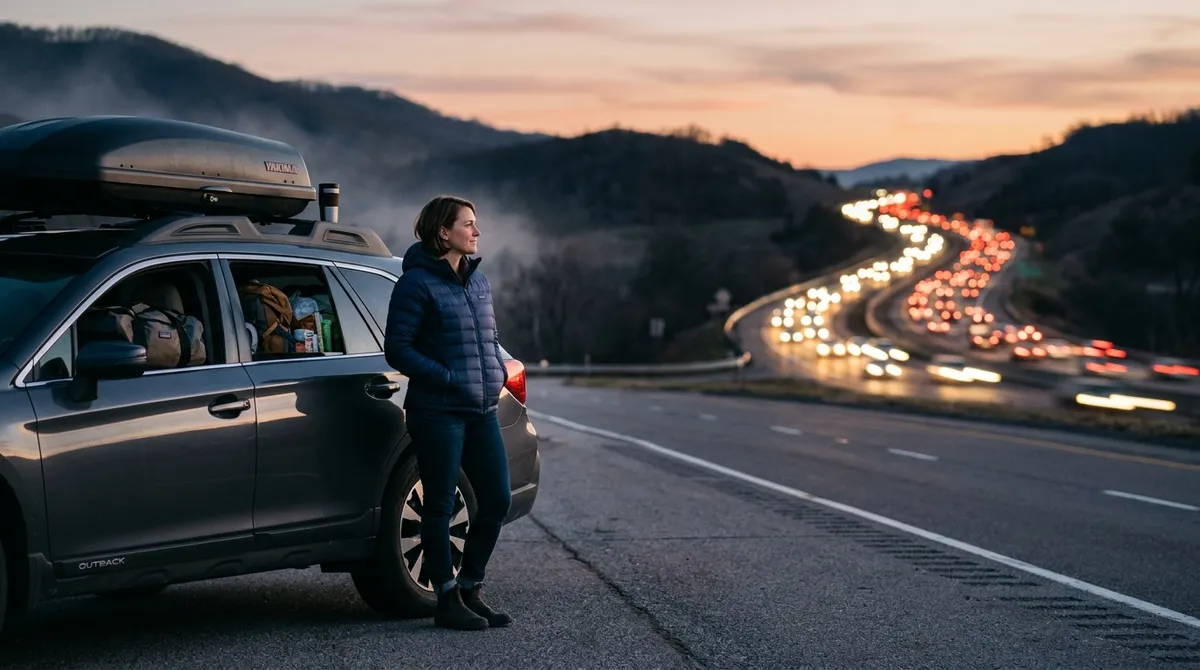
Labor Day weekend sits near the top of the annual traffic misery index — and if you're reading this before you leave, you still have time to make smarter choices about when and how you go.
This guide focuses on the one thing that separates a smooth holiday trip from a three-hour parking lot on the interstate: timing. Get that right, and most other headaches solve themselves.
Why Labor Day Weekend Is Genuinely Different
Holiday weekends compress normal travel demand into a few specific windows. Labor Day is particularly sharp because it marks the psychological end of summer — people who held off on one last trip all season are all moving at once. That means both outbound and return traffic hit unusual peaks, and roads that handle weekday commutes fine can grid-lock completely.
The result isn't just slow driving. It's unpredictable slow driving, where conditions can shift from moving to stopped in minutes depending on a single fender-bender or an on-ramp backup several miles ahead.
The Smartest Windows to Travel
The general pattern for a three-day holiday weekend runs like this:
Friday is the heaviest outbound day. Afternoon and evening — roughly after noon — are when most people leave work early and hit the road. If you can leave Thursday evening or very early Friday morning (before 7 a.m.), you'll be ahead of the bulk of the surge.
Saturday morning is the second wave. If Friday doesn't work, Saturday before 8 a.m. is still manageable on most corridors.
Monday is the crunch return day. The worst window is typically mid-afternoon through early evening as people try to get home before Tuesday. If your schedule allows, returning Sunday evening or waiting until Tuesday morning cuts your return time significantly.
None of this is Labor Day-specific speculation — it's the consistent pattern of holiday travel demand, and it applies whether you're driving two hours or twelve.
Check Conditions Before You Leave, Not After You're Stuck
Local road conditions on holiday weekends can shift based on construction schedules, special events, and regional factors that don't show up in general travel advice. Before you leave:
- Check your state DOT's traffic page. Most state departments of transportation publish real-time road condition maps and post holiday-weekend advisories. Search "[your state] DOT traffic" to find it.
- Set a route alert in your navigation app. Apps like Waze and Google Maps let you set departure reminders that factor in predicted traffic, not just current conditions.
- Look up any local events at your destination. Festivals, races, and outdoor concerts cluster around Labor Day and can turn a normally easy final stretch into a long detour.
Spending ten minutes on this before you leave is worth more than any shortcut you might find mid-trip.
Last-Minute Packing: What Actually Matters
If you're leaving with less than 24 hours to prepare, skip the elaborate checklist and focus on the things that derail holiday trips specifically:
Documents and payment. If you're crossing state lines or using toll roads, confirm you have what you need — updated registration, a working E-ZPass or toll cash, and a backup payment method. Holiday weekends are not when you want to discover your card is flagged.
A physical backup for your route. Navigation apps fail in dead zones, and some popular outdoor destinations have genuinely poor cell coverage. Screenshot your route or download an offline map before you lose signal.
Water and snacks for the car. Traffic delays on holiday weekends can be long and unpredictable. A cooler with water and food turns a frustrating delay into a minor inconvenience.
Roadside basics. A charged portable battery, jumper cables, and a basic first aid kit take up almost no space and matter a lot if something goes wrong in high-traffic conditions where pulling over safely is harder than usual.
Safety Patterns Specific to Holiday Weekends
Holiday weekends see elevated rates of both fatigue-related driving incidents and impaired driving. A few practical adjustments:
Plan rest stops deliberately. If you're driving more than four hours, build in a stop rather than pushing through. On busy holiday corridors, rest areas fill up — identify two or three options along your route so you're not hunting for parking when you need a break.
Be conservative around late-night driving on Saturday and Sunday. Impaired driving incidents peak in the late evening hours on holiday weekends. If you have flexibility in your schedule, finishing your drive before 10 p.m. reduces your exposure significantly.
Give extra following distance in heavy traffic. Brake times compound when everyone around you is also reacting late. More space ahead of you is the simplest safety margin you have.
One Adjustment Worth Making Right Now
If you haven't confirmed your departure time yet, move it earlier — even by an hour. The difference between leaving at 6 a.m. and 9 a.m. on a holiday Friday can easily be two to three hours of driving time on a busy corridor. That's not a small thing. It's the difference between a trip that starts relaxed and one that starts already behind.
Check your state DOT page tonight, set a departure alarm for early, and load your offline maps before you lose signal. Everything else is detail.