After years of hotel bathrooms telling her to reuse her towels "to save the Earth," a travel writer began to suspect something more complicated was going on. In a piece for The Age, she reflects on a decade of chasing "sustainable" travel and concludes that many of the most popular eco-habits have minimal real impact compared with factors we rarely think about: who owns the places we pay, where our food comes from, and how a trip is structured.
This article takes one of her arguments and builds a practical audit around it: follow the money. By the end, you'll have a set of questions to ask before you book, so your spending lands in the community you came to see.
The feel-good habits that change little
Reusable bottles, towel reuse, bamboo toothbrushes and carbon offsets are the familiar toolkit of the virtuous traveler. The Age piece argues that these gestures make us feel good while doing comparatively little. That isn't a case for abandoning them. It's a case for not stopping there.
The useful question is not "Did I perform sustainability?" but "What did my trip actually change at the destination?" That shifts attention from your luggage to your wallet.
Think like an investigator: follow the leakage
The central idea in the piece is who profits from tourism spending. Economists call the money that flows out of a destination, rather than staying in it, "leakage." If you stay at a foreign-owned resort, eat at an international chain and book through an overseas platform, much of your spending may never touch the local economy, however green the property's branding.
The flip side is the opportunity: you can redirect money to local communities through deliberate choices. A few ways to check:
- Look up the owner. A hotel's "About" page, a quick web search or a local news mention often reveals whether it's a family business or part of a distant group.
- Book direct where you can. Contacting a small guesthouse or guide yourself generally leaves less between you and the people doing the work.
- Ask locals. Your host, a shopkeeper or a guide will usually know which businesses are community-run and which just look the part.
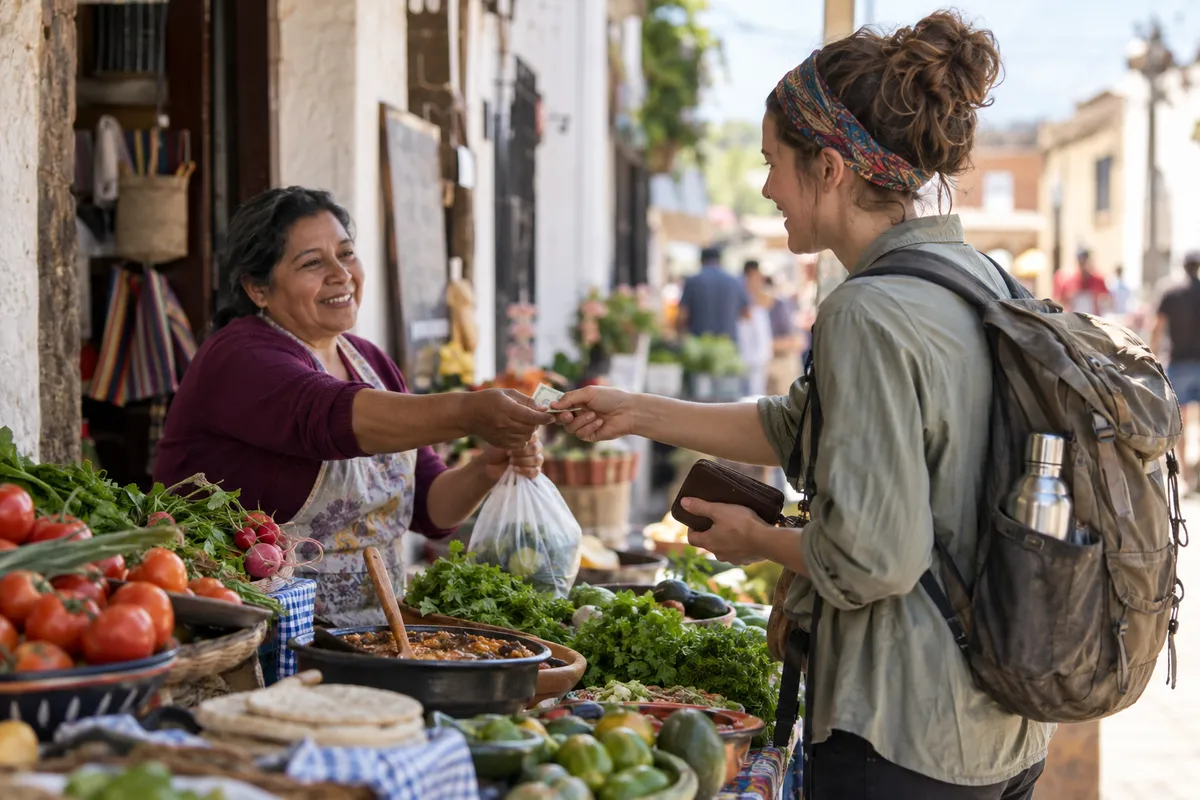
- Spread your spending. A neighborhood café, a market stall and a local guide put money in more hands than a single all-inclusive package.
Eat what the place grows
Food sourcing is one of the overlooked factors the author highlights, alongside seasonal eating. For the curious traveler, this is also the most rewarding lever. Regional dishes are a record of climate, trade routes and agriculture, which is exactly the kind of "why is it like this here?" story that makes a destination legible.
In practice: eat at places that serve what's in season nearby, skip the imported-comfort-food menu, and visit a local market. You're supporting local producers and getting a better meal.
Stay longer, go to fewer places
The piece also points to trip structure. Staying longer in fewer places reduces both your carbon footprint and the economic harm of rushed, high-volume tourism. Every extra transfer means more transport, and a whirlwind itinerary tends to push you toward whatever is easiest and most standardized.
Slow travel has a second payoff. When you stay put, you learn the neighborhood, find the bakery the guidebook missed, and notice the layers of history in a single street. Depth is both the more sustainable choice and the more interesting one.
Read past the green badge
Eco-certifications and green labels can be misleading, and the piece encourages readers to look beyond them. A badge tells you someone paid for or claimed a credential. It doesn't tell you who owns the business, who it employs or where its supplies come from.
Treat a badge as a starting point for questions:
- Who owns this place?
- Do local people work here, and in what roles?
- Where does the food come from?
- What does this business specifically do, beyond asking me to reuse a towel?
A business that can answer these concretely is more convincing than one with a logo and a slogan.
A quick pre-trip audit
Before you book your next trip, run through this:
- Structure: Can I cut one destination and stay longer in the others?
- Lodging: Is it locally owned, or can I find one that is?
- Food: Can I plan most meals around local, seasonal produce and independent restaurants?
- Guides and activities: Am I paying local operators directly?
- Claims: Have I looked beyond the eco-label?
None of this requires perfection. It requires attention to where the money goes.
Travel as a tool for questioning your assumptions
The author also frames travel as a way to shift personal values and question assumptions about "the good life." That's the quieter point beneath the practical advice. Spending time in places that organize life differently, around different food, pace and priorities, can change what you want at home.
The takeaway
Before your next booking, pick one choice, whether lodging, a meal or a guide, and trace who actually gets paid. Then choose the option that keeps the money where the place is.