Traveling can be exhilarating, but staying in an unfamiliar hotel room often disrupts sleep and relaxation. As wellness-focused travel becomes more prevalent, many are seeking simple ways to transform temporary spaces into sanctuaries of calm. Feng Shui, the ancient Chinese practice of arranging spaces to promote harmony and well-being, offers insightful tips on how to achieve this. Here are 13 practical Feng Shui tricks you can implement to enhance your hotel room experience, leading to better sleep and restful stays.
1. Assess the Room's Energy
The first step is to assess the energy flow in your hotel room. Pay attention to where the light enters, which areas feel cramped, and how you feel in various spaces. This awareness will inform the adjustments you can make.
2. Choose a Good Room Location
If possible, request a room away from high-traffic areas like elevators and ice machines. A quieter room will be more conducive to relaxation and sleep.
3. Clear Clutter
Upon entering your room, take a moment to clear any clutter. Remove unnecessary items from surfaces and put your belongings in designated areas. A clean, uncluttered space allows energy to flow freely, promoting tranquility.
4. Optimize Your Bed Position
Feng Shui advocates positioning your bed in a command position, ideally facing the door without being directly aligned with it. If the layout doesn't allow for that, use a mirror to create a sense of awareness of the entrance.
5. Minimize Electronics
Electronics emit electromagnetic fields that can interfere with sleep. Whenever possible, unplug or turn off devices like phone chargers, TVs, and lamps when not in use.
6. Incorporate Soothing Colors
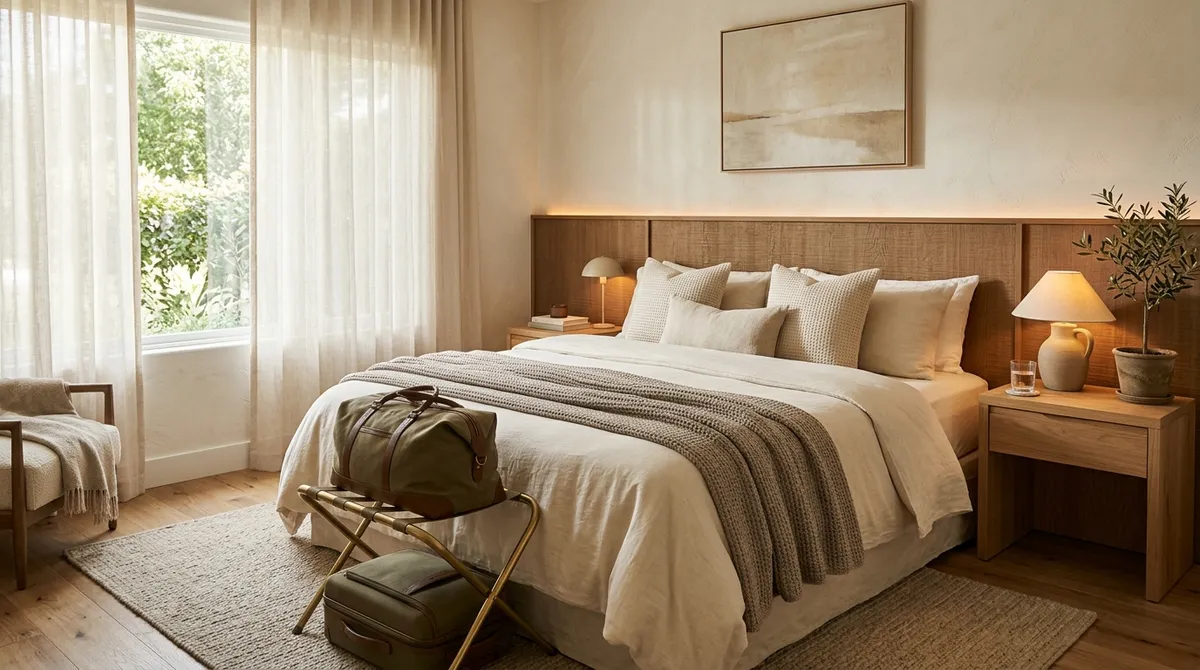
Add a calming touch by utilizing color. If you can, drape a soft blanket in soothing colors over the bedding or adjust the room's lighting to warm, muted tones—think soft oranges, blues, or greens—to blanket the space in serenity.
7. Utilize Plants or Fresh Flowers
Nature promotes relaxation and vibrational harmony. If allowed, place a small plant or a vase of fresh flowers on a table or window sill to connect with nature and boost the ambiance.
8. Bring in Calming Scents
Essential oils can influence mood and well-being. Use a travel-sized diffuser or calming essential oil spray. Scents like lavender and eucalyptus are excellent for promoting relaxation and sleep.
9. Adjust Your Lighting
Take control of lighting by using only soft lighting options. If there’s a harsh overhead light, cover it with a scarf or cloth to dim it down. Consider adding a bedside lamp for a softer glow in the evening.
10. Create a Sacred Space
Designate a small area in your room as a relaxation corner. You can use a chair, a few cushions, or even a yoga mat where you can meditate or breathe deeply to reset your mind during your stay.
11. Enhance the Sound Environment
Bring small sound sources that can calm or soothe you, like a white noise machine or a sleep music playlist on your phone. Soft, nature-based sounds can mask disturbances from outside noise and promote restful sleep.
12. Close the Door Mindfully
As you enter or exit your hotel room, do it mindfully. Closing the door gently signals to your mind that you are creating a boundary between the outside world and your personal space.
13. Personalize Your Room
Lastly, make the space your own by adding personal items, such as a beloved pillow or photograph. Personalization encourages a sense of comfort and security, integral to calmness and relaxation.
By incorporating these Feng Shui tips, you can transform even the most basic hotel room into a peaceful retreat. These small adjustments may help you sleep better, feel more grounded, and emerge from your travels refreshed, ready to embrace your adventures. No matter where you're staying, a little awareness and intentionality can go a long way in enhancing your travel experience.